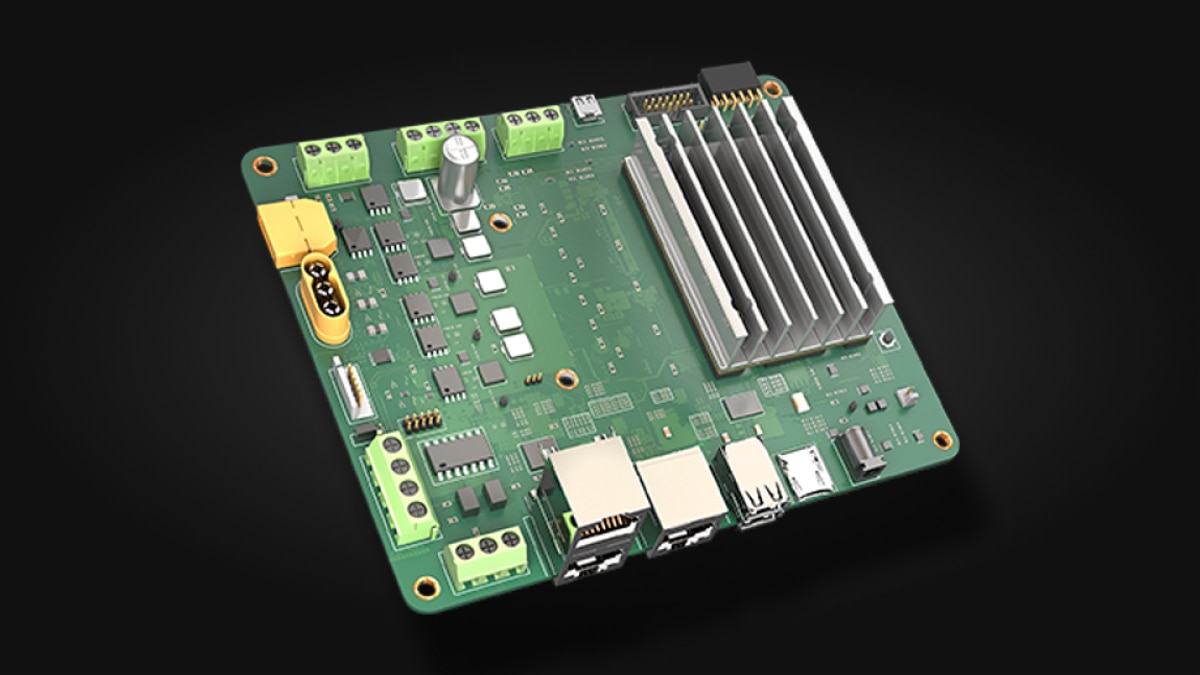
Boost deployment speed with flexible computer on module hardware
What's a SOM

Efficient and timely deployment in any technical environment is crucial for ensuring streamlined workflows and meeting deadlines. Flexible computer on module hardware has emerged as a powerful solution to overcome deployment bottlenecks in various industries. This approach allows for scalability, customization, and adaptability, all of which contribute to speeding up the deployment process while aligning with evolving technological demands. 

This blog explores how flexible computer on module hardware can revolutionize deployment speed and elevate operational efficiency. 

Understanding Computer on Module Hardware 

A computer on module, sometimes referred to as COM, is a compact and modular single-board computer. Unlike traditional systems, it is designed to integrate effortlessly into various hardware systems by functioning as a building block. COM technology is popular for its flexibility and scalability, making it easier for developers and engineers to deploy projects faster without reinventing the wheel for every application. 

Flexible computer on module hardware takes this concept further by allowing more customizable integrations. These adaptable systems can address the diverse requirements of industries ranging from IoT to manufacturing to healthcare. This innovation ensures seamless system deployments while accommodating specific operational needs. 

Benefits of Flexible Computer on Module Hardware 

1. Faster Time to Market 

Flexible computer on module hardware accelerates the development process. By utilizing pre-designed modules, companies eliminate the need to design core computing functions from scratch. This drastically reduces the overall time required for manufacturing and integration. 

With the rising complexities of modern applications, having pre-tested components streamlines product deployment, ensuring that organizations meet market demands swiftly. 

2. Constant Adaptability 

One primary advantage of flexible COM solutions is their adaptability. Dynamic environments require modular designs that can be customized or expanded with minimal effort. COMs facilitate rapid hardware adaptations without delays caused by traditional redesigns. 

For example, varying connectivity requirements, such as Wi-Fi capabilities or additional sensors, can be seamlessly incorporated via flexible hardware modules. This adaptability ensures that the systems remain relevant in varying scenarios. 

3. Efficient Use of Resources 

Traditional hardware often results in wasted resources, especially when features remain unused. Flexible computer on module hardware ensures that you implement only what’s necessary for your application, leading to more efficient resource utilization. 

This specificity prevents unnecessary expenses and ensures that investments are directed toward truly impactful elements. Developers and engineers can dedicate their time to refining unique features instead of grappling with generic system architecture. 

4. Scalability for Future Growth 

The modular nature of computer on module hardware inherently supports scalability. Whether you’re deploying a product for a small-scale operation or planning a system for global reach, modular components allow you to easily scale up or down depending on operational requirements. 

This scalability is particularly advantageous for industries like IoT or data analysis, where growth is tied to the ability to integrate more robust systems down the line efficiently. 

5. Simplified Maintenance and Upgrades 

System maintenance and upgrades often contribute to delays and prolonged downtime. Flexible computer on module hardware minimizes such interruptions by enabling seamless replacements and updates. Individual modules can be swapped or upgraded without overhauling the entire system. 

This advantage ensures consistent operational continuity, reducing periods of inactivity and losses associated with hardware maintenance. 

6. Enhanced Customization 

Every deployment scenario carries unique requirements, and standard systems may often fall short. Flexible single board computer ai technology ensures enhanced customization, allowing developers to tailor solutions for specific needs. 

From specialized interfaces to industry-specific features, modular components meet operational demands without requiring extensive engineering. This targeted customization is highly beneficial for niche industries with unique applications. 

The Tech Edge That Keeps You Ahead

In today’s highly competitive environment, companies cannot afford to stand still. Businesses operating the same old way, selling the same products risk extinction as customer expectations and technological capabilities continuously evolve. To maintain relevancy against digital-native upstarts, established organizations must push innovation across every facet of operations, especially technology infrastructure underpinning key workflows. The people at Opkalla explain that by harnessing emerging cloud app solutions alongside a proactive mindset, enterprises gain a flexible edge that keeps them continually positioned for whatever comes next.

Getting Stuck in Technology Status Quo

Most companies recognize the imperative to actively develop better solutions satisfying their customers’ needs. But improving products and services represents only half the innovation equation. Without simultaneously streamlining antiquated workflows and upgrading brittle backend systems, even the most creative ideas hit walls during execution.

Many established organizations limp along hampered by aging IT infrastructure. Attempts to digitize paper-based forms end up recreated using outdated software. Employees waste time toggling between disjointed apps to accomplish basic tasks. Simple requests like password changes drag on waiting for IT ticket resolution.

Rather than empowering progress, technology bottlenecks spawn workforce frustration and stagnation. Talent burned out by bureaucratic drudgery cannot brainstorm creative improvements. In the quest to move their industries ahead through innovation, these enterprises first must modernize core systems dragged down by technical debt.

Harnessing Emerging Tech

To regain a competitive edge, business leaders must critically reassess existing technology with the mindset of a startup disrupter. Rapidly advancing cloud app solutions offer ideal building blocks for business innovation and renewal. Unlike traditional software requiring lengthy installations, cloud platforms deploy rapidly with minimal infrastructure dependencies. Teams access the same data in real time from anywhere using simple web browsers. Custom configurations automate inefficient manual processes without needing engineering resources. Scalability supports user expansion without additional equipment.

Specialized apps now exist to tackle almost any business operations functions from accounting to project management to eCommerce. With a little creativity, organizations can stitch together integrated app ecosystems far more responsive to evolving needs than legacy enterprise software behind the times.

Upgrading Tech Management Mindsets

But more than purchasing new technologies, realizing real competitive advantage requires teams to proactively identify and resolve infrastructure limitations using cloud-based thinking. Forward-thinking leaders approach technology itself as an ongoing innovation discipline rather than fixed-cost line item. They strategically budget to continually refresh systems on parallel tracks with developing improved products. Talent stays expressly focused on imagining next-generation solutions versus accepting status quo processes. Partners provide informed guidance across exponentially growing technology capabilities versus just maintaining legacy hardware.

With the right mindset adjustments, cloud app solutions end up not just streamlining current business functions but unlocking capacity to actually disrupt markets going forward.

Staying Ahead by Building Ahead

Actively seeking opportunities to deploy emerging technologies, keeping them steps ahead means organizations evolve their mentalities alongside infrastructure. New cloud-based systems make expanding into advanced analytics, Internet of Things sensors, machine learning and more exponentially easier over time.

Periodic upgrades become strategic investments into permanent competitive advantage rather than mere cost centers. What was once a restrictive technology, demanding cumbersome workarounds, has evolved into a primary driver of innovation, consistently exceeding customer expectations. Business progress is being driven by rangers in all departments.

Conclusion

True innovation requires looking at existing operations with the hungry eyes of an industry outsider. For incumbent enterprises, overcoming inertia around aging systems represents the first step to not just modernizing but actually leapfrogging the competition. Harnessing flexible and scalable cloud app solutions in conjunction with proactive, startup-style thinking keeps organizations continually poised to build what’s coming next rather than just maintaining what already exists.

physicists create a particle: Expanding knowledge of quantum science.


Quantum science has always fascinated researchers and enthusiasts alike, pushing the limits of human understanding about the universe. Recently, physicists create a particle significant strides by creating a particle that further bridges the gaps in our knowledge of quantum mechanics. This breakthrough is the foundation for exploring new realms of science and unlocking practical applications that could transform the way we live.

Understanding the Creation of a Particle

The creation of synthetic particles in controlled environments is no small task. It involves manipulating quantum fields and conditions to produce something entirely new. These synthetic particles expand physicists’ understanding of the quantum world by simulating complex scenarios that cannot be easily examined in natural settings.

More importantly, the creation of these particles highlights the sophistication of quantum mechanics as a field. It combines intricate statistical models, complex math, and advanced technologies to not only study existing phenomena but create new systems that reveal the nuanced behavior of matter, energy, and interactions at subatomic levels.

Why Is This a Significant Achievement?

The implications of creating a particle in the realm of quantum science are far-reaching. While the process is fascinating from a theoretical perspective, it is the potential benefits and applications of such a breakthrough that capture the imagination. Institutions and researchers worldwide look at these advancements as a step towards realizing futuristic technologies and deepening our grasp of the natural order.

Benefits of Expanding Quantum Knowledge

The creation of a new particle isn’t just a milestone for quantum mechanics—it holds promise for real-world applications. Below are some of the potential benefits emerging from this scientific breakthrough:

1. Enhanced Understanding of Quantum Physics

Advances like particle creation help uncover more about quantum entanglement, superposition, and dual particle-wave behaviors. These ideas, while fascinating to physicists, also have practical implications. By refining our theories and mathematical models of quantum systems, physicists can provide deeper insights into the fundamental laws governing our universe.

This expanded understanding of quantum physics serves as a building block for future discoveries—ranging from devising new materials to creating innovative, energy-efficient systems.

2. Progress Toward Quantum Computing

Quantum computing has been heralded as the next big revolution in computational technology. The manipulation of particles introduces possibilities for creating more stable quantum states and better qubits, which are the basic units of quantum computing.

The addition of synthetic particles to the mix could lead to more efficient quantum circuits and error correction models, making quantum computers functional and commercially viable at a large scale. This would enable faster problem-solving capabilities for applications like cryptography, climate modeling, and complex decision-making systems.

3. Energy Advancements and Sustainability

One of the significant applications of advances in quantum studies is the potential to revolutionize energy efficiency and sustainability. By experimenting with particles and quantum phenomena, researchers may discover ways to create better energy storage technologies and new materials designed for energy conservation.

This research contributes to long-term sustainability by developing efficient power grids, low-loss materials, and energy-conversion devices that harness previously untapped sources.

4. Innovations in Communication Technology

The concepts of quantum mechanics are already being explored to create secure communication systems. The study and creation of these particles could further enhance tools like quantum key distribution, effectively protecting sensitive data from unauthorized access.

Additionally, advancements enabled by these synthetic particles may streamline global communication networks by providing more efficient ways of transmitting and processing data across distances with reduced latency.